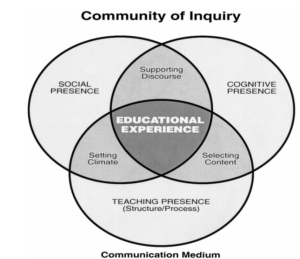
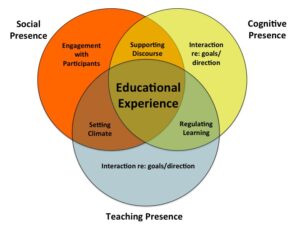
Garrison, D. R., Anderson, T., & Archer, W. (2000). Critical inquiry in a text-based environment: Computer conferencing in higher education. The Internet and Higher Education, 2(2-3), 87-105. https://doi.org/10.1016/S1096-7516(00)00016-6 Summary This article introduces the Community of Inquiry (CoI) model, which includes three main elements essential for effective online learning: cognitive presence, social presence, and teaching presence. …
Richardson, J. C., & Swan, K. (2003). Examining social presence in online courses in relation to students’ perceived learning and satisfaction. Journal of Asynchronous Learning Networks, 7(1), 71-88. Summary Abrami et al. (2011) explain that interaction is a key part of online and distance learning. They point out three main types of interaction that influence student learning: …
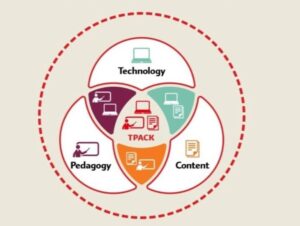
Mishra, P., & Koehler, M.J. (2006). Technological pedagogical content knowledge: A framework for integrating technology in teacher knowledge. Teachers College Record, 108(6), 1017-1054. Summary Punya Mishra and Matthew J. Koehler introduce the TPCK framework, which combines content, teaching methods, and technology. They argue that teachers should integrate these elements to use technology effectively in the classroom. The …
Ramasany, V., Md Noor, N., & Mohd Zaid, N. (2022). Effects of learning using EDPUZZLE interactive video application on students’ interest, engagement, and achievement in science subjects. Innovative Teaching and Learning Journal, 6(2), 59–72. Summary This study was conducted in Malaysia and examines how using EdPuzzle, an interactive video tool, influences primary school students’ performance …
Schwartz, D. L., & Hartman, K. (n.d.). It is not television anymore: Designing digital video for learning and assessment. In R. Goldman, S. Derry, R. Pea, & B. Barron (Eds.), Video Research in the Learning Sciences. Mahwah, NJ: Erlbaum. Summary This article provides valuable insights into using videos in education. In this paper, Schwartz and …
Susilawati, S., & Supriyatno, T. (2020). Online learning through WhatsApp group in improving learning motivation in the era and post-pandemic COVID-19. Jurnal Pendidikan: Teori, Penelitian, dan Pengembangan, 5(6), 852-859. Summary This paper looks at how using WhatsApp for online learning has helped improve student motivation during and after the COVID-19 pandemic. The study focused on …
Kuiper, E., Volman, M., & Terwel, J. (2005). The Web as an information resource in K–12 education: Strategies for supporting students in searching and processing information. Review of Educational Research, 75, 285–328. Summary This paper explores how students from kindergarten through 12th grade use the web for learning and the challenges they encounter when searching for …
Ross, S., Morrison, G., Lowther, D. (2010). Educational technology research past and present: Balancing rigor and relevance to impact school learning. Contemporary Educational Technology, 1(1), 17-25. Summary The article explores the history of educational technology research, highlighting the balance between scientific accuracy and practical use. It covers the evolution from early technology like films, and …
Clark, R. E. (1994). Media will never influence learning. Educational Technology Research and Development, 42(2), 21-29. Summary In Richard E. Clark’s paper “Media Will Never Influence Learning” (1994), he argues that tools like computers, videos, or books don’t help people learn better by themselves. Instead, it’s how things are taught and what is being taught that matters. Clark …