Zimmerman, H. T., & Weible, J. L. (2018). Epistemic agency in an environmental sciences watershed investigation fostered by digital photography. International Journal of Science Education, 40(8), 894-918. Summary This article examines how high school students used digital photography to get more involved in environmental science activities. The study at a rural U.S. high school focused …
Glăveanu, V. P. (2020). A sociocultural theory of creativity: Bridging the social, the material, and the psychological. Review of General Psychology, 24(4), 335–354. https://doi.org/10.1177/1089268020961763 Summary Vlad P. Glăveanu’s article presents a sociocultural theory of creativity, focusing on how social interactions, material environments, and psychological factors work together to drive creativity. The theory highlights the role …
Ertmer, P. A., Richardson, J. C., Belland, B., Camin, D., Connolly, P., Coulthard, G., Lei, K., & Mong, C. (2007). Using peer feedback to enhance the quality of student online postings: An exploratory study. Journal of Computer-Mediated Communication, 12(3), 412–433. doi:10.1111/j.1083-6101.2007.00331.x Summary This study by Ertmer et al. (2007) explores the impact of peer feedback …
Susilawati, S., & Supriyatno, T. (2020). Online learning through WhatsApp group in improving learning motivation in the era and post-pandemic COVID-19. Jurnal Pendidikan: Teori, Penelitian, dan Pengembangan, 5(6), 852-859. Summary This paper looks at how using WhatsApp for online learning has helped improve student motivation during and after the COVID-19 pandemic. The study focused on …
Kuiper, E., Volman, M., & Terwel, J. (2005). The Web as an information resource in K–12 education: Strategies for supporting students in searching and processing information. Review of Educational Research, 75, 285–328. Summary This paper explores how students from kindergarten through 12th grade use the web for learning and the challenges they encounter when searching for …
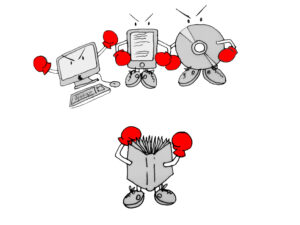
Clark, R. E. (1994). Media will never influence learning. Educational Technology Research and Development, 42(2), 21-29. Summary In Richard E. Clark’s paper “Media Will Never Influence Learning” (1994), he argues that tools like computers, videos, or books don’t help people learn better by themselves. Instead, it’s how things are taught and what is being taught that matters. Clark …
Sawyer, R. K. (2006). Chapter 1 Introduction: The New Science of Learning. In R. K. Sawyer (Ed.). The Cambridge Handbook of the Learning Sciences(p. 1-16). New York: Cambridge University Press. SummaryThe chapter “Introduction: The New Science of Learning” by R. K. Sawyer explores how cognitive science has transformed education by focusing on how students think and …